the journey here
Somewhere along the way, I absorbed a piece of familiar advice to a lot of veterinarians who love horses: if you want to keep horses as the thing you love, don’t make them your job.
So I didn’t. I kept my hobby any my career neatly separated and found my professional home in small animal emergency medicine. And honestly, is suited me.
I’m Type A. I notice details. I like complicated cases, high standards, and having to think fast and build trust with clients even faster. Emergency medicine taught me how to take a room full of uncertainty and quickly figure out what matters most. It taught me to make difficult decisions with incomplete information and, perhaps most importantly, how to ear someone’s trust through wholehearted communication.
In the ER, there often isn’t time to build a relationship over months or years. Sometimes you have minutes.
I learned that transparency and excellent communication matter just as much as excellent medicine. Owners deserve to understand what I see, what I don’t know yet, what I recommend, and why. At its best, emergency medicine gave me the opportunity to make a very real difference for an individual animal and the people who love them.
I love that responsibility.
Then Life Got Bigger
My career grew alongside my family.
I became a mother while continuing to practice emergency medicine. I spent three years serving as the Medical Director of a 24/7 emergency hospital, while remaining involved in and supportive of the general practice my veterinarian husband and I own.
For a while, I was balancing motherhood, leadership, clinical medicine, our family business—and, somewhere in all of that, still finding my way back to the barn.
Those years changed me.
They didn’t make me love medicine less. They made me more intentional about how I wanted to practice it, where I wanted to spend my energy, and what kind of veterinarian I wanted to become next.
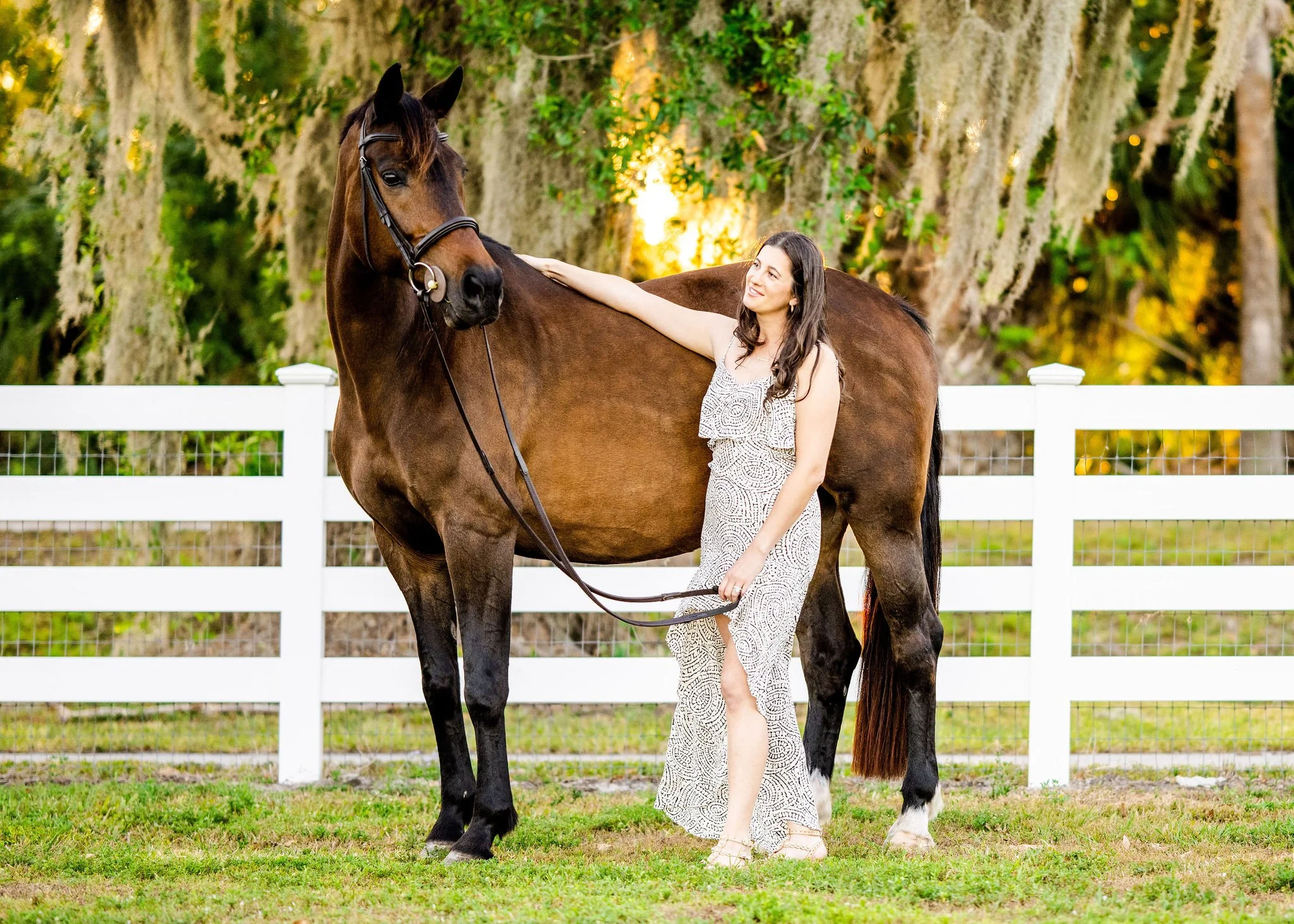
And then there was my constant through it all, Dori.
Somewhere along the way, I absorbed a piece of familiar advice to a lot of veterinarians who love horses: if you want to keep horses as the thing you love, don’t make them your job.
the journey here
So I didn’t. I kept my hobby any my career neatly separated and found my professional home in small animal emergency medicine. And honestly, is suited me.
I’m Type A. I notice details. I like complicated cases, high standards, and having to think fast and build trust with clients even faster. Emergency medicine taught me how to take a room full of uncertainty and quickly figure out what matters most. It taught me to make difficult decisions with incomplete information and, perhaps most importantly, how to ear someone’s trust through wholehearted communication.
In the ER, there often isn’t time to build a relationship over months or years. Sometimes you have minutes.
I learned that transparency and excellent communication matter just as much as excellent medicine. Owners deserve to understand what I see, what I don’t know yet, what I recommend, and why. At its best, emergency medicine gave me the opportunity to make a very real difference for an individual animal and the people who love them.
I love that responsibility.
Then Life Got Bigger
My career grew alongside my family.
I became a mother while continuing to practice emergency medicine. I spent three years serving as the Medical Director of a 24/7 emergency hospital, while remaining involved in and supportive of the general practice my veterinarian husband and I own.
For a while, I was balancing motherhood, leadership, clinical medicine, our family business—and, somewhere in all of that, still finding my way back to the barn.
Those years changed me.
They didn’t make me love medicine less. They made me more intentional about how I wanted to practice it, where I wanted to spend my energy, and what kind of veterinarian I wanted to become next.
And then there was my constant through it all, Dori.
Sometimes One Horse Changes the Questions
Dori is one of my own horses.
Like so many important things with horses, what began as trying to understand one horse eventually became something much bigger.
She made me curious.
Not because conventional veterinary medicine had failed her, but because I found myself wanting to understand more. I wanted another way to understand the subtle things horse people recognize so well—the things that didn’t fit neatly into a diagnostic box.
She’s going well, but something feels different.
She’s sound, but she doesn’t quite feel like herself.
We found the problem, but is there more we can do to support the whole horse?
Dori made me start asking different questions.
And perhaps more importantly, she reminded me that “this is how we’ve always done it” has never been a particularly satisfying answer for me.
I wanted to know why.
Why does this horse compensate this way? Why does one treatment help one horse tremendously and another very little? What else can the physical examination tell us? What happens when we look beyond the obvious complaint? And could another system of medicine give me a different way to understand the same horse?
Curiosity took over. And once you “see” it that way too, you can’t unsee it.
Another Lens, Not Another Side
That curiosity eventually led me to Traditional Chinese Veterinary Medicine and acupuncture.
What I found wasn’t a reason to abandon the medicine I’d spent my career practicing.
It was another lens through which to look at it.
My years in emergency medicine taught me to respect diagnostics, evidence, anatomy, physiology, pathology, and the enormous capability of modern veterinary medicine. TCVM asked me to slow down, put my hands on the horse, pay attention to patterns, and consider relationships between findings that I might otherwise have viewed independently.
I didn’t want to choose between those perspectives.
I wanted to become better at using both.
And somewhere along the way, the line I’d drawn years ago between horses as my passion and veterinary medicine as my profession started to disappear.
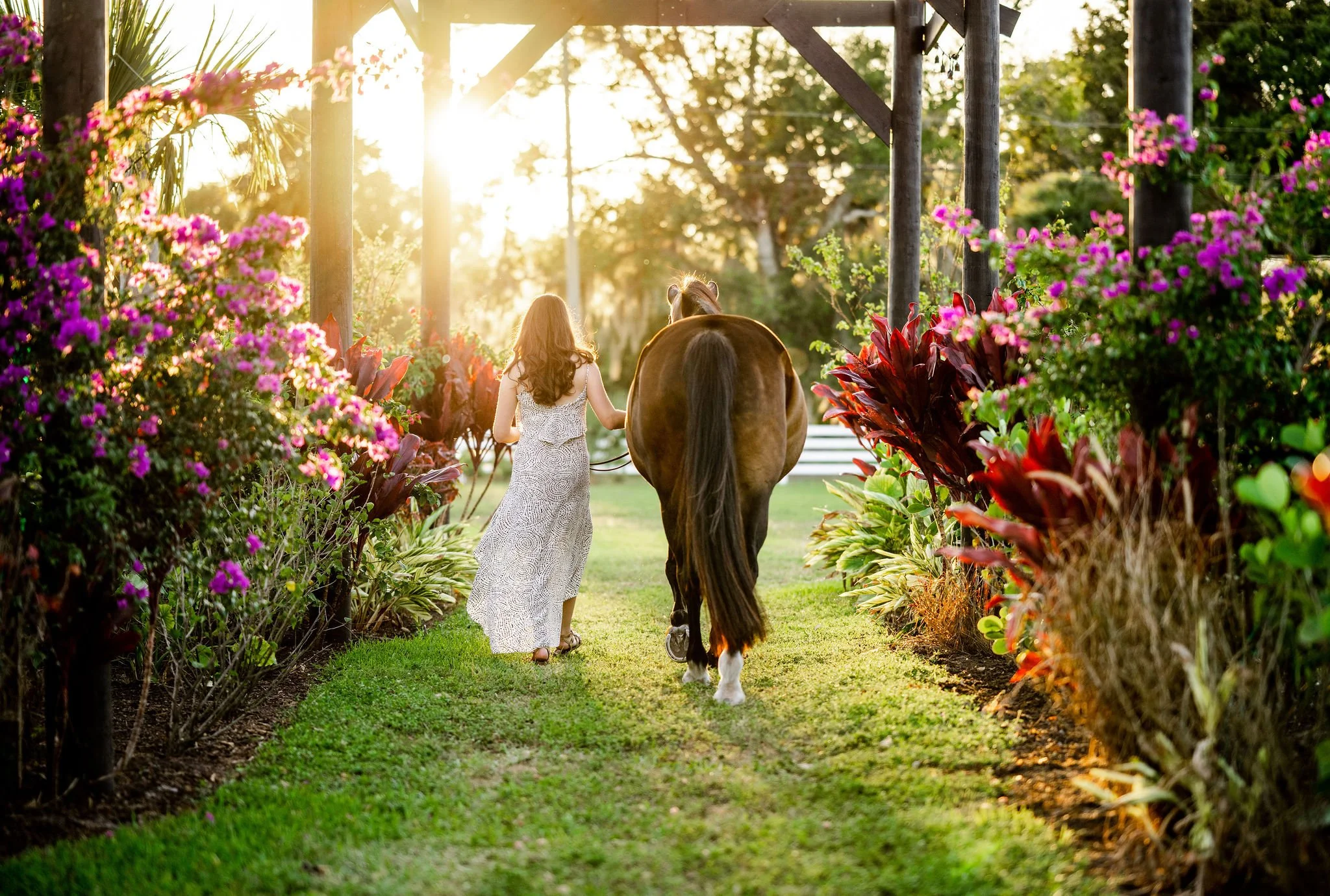
Sometimes One Horse Changes the Questions
Dori is one of my own horses.
Like so many important things with horses, what began as trying to understand one horse eventually became something much bigger.
She made me curious.
Not because conventional veterinary medicine had failed her, but because I found myself wanting to understand more. I wanted another way to understand the subtle things horse people recognize so well—the things that didn’t fit neatly into a diagnostic box.
She’s going well, but something feels different.
She’s sound, but she doesn’t quite feel like herself.
We found the problem, but is there more we can do to support the whole horse?
Dori made me start asking different questions.
And perhaps more importantly, she reminded me that “this is how we’ve always done it” has never been a particularly satisfying answer for me.
I wanted to know why.
Why does this horse compensate this way? Why does one treatment help one horse tremendously and another very little? What else can the physical examination tell us? What happens when we look beyond the obvious complaint? And could another system of medicine give me a different way to understand the same horse?
Curiosity took over. And once you “see” it that way too, you can’t unsee it.
Another Lens, Not Another Side
That curiosity eventually led me to Traditional Chinese Veterinary Medicine and acupuncture.
What I found wasn’t a reason to abandon the medicine I’d spent my career practicing.
It was another lens through which to look at it.
My years in emergency medicine taught me to respect diagnostics, evidence, anatomy, physiology, pathology, and the enormous capability of modern veterinary medicine. TCVM asked me to slow down, put my hands on the horse, pay attention to patterns, and consider relationships between findings that I might otherwise have viewed independently.
I didn’t want to choose between those perspectives.
I wanted to become better at using both.
And somewhere along the way, the line I’d drawn years ago between horses as my passion and veterinary medicine as my profession started to disappear.
And Then Came AEQUuS
AEQUS is the result of following that curiosity.
It’s a practice built for the veterinarian I’ve become: still Type A, still detail-oriented, still asking too many questions, and still unwilling to accept an answer simply because it’s the way something has always been done.
But now, I have the opportunity to slow down to make more of a difference.
To listen to the owner. To listen to the trainer. To review the diagnostics. To put my hands on the horse. To notice the subtle things. To collaborate with the veterinarians who already know that horse. And to bring another set of tools and another perspective to the conversation.
I don’t believe we need to choose between conventional medicine and TCVM.
I believe we should be curious enough to ask what each can teach us.
Because sometimes progress doesn’t begin with having a different answer.
It begins with being willing to ask a different question.
And Then Came AEQUuS
AEQUUS is the result of following that curiosity.
It’s a practice built for the veterinarian I’ve become: still Type A, still detail-oriented, still asking too many questions, and still unwilling to accept an answer simply because it’s the way something has always been done.
But now, I have the opportunity to slow down to make more of a difference.
To listen to the owner. To listen to the trainer. To review the diagnostics. To put my hands on the horse. To notice the subtle things. To collaborate with the veterinarians who already know that horse. And to bring another set of tools and another perspective to the conversation.
I don’t believe we need to choose between conventional medicine and TCVM.
I believe we should be curious enough to ask what each can teach us.
Because sometimes progress doesn’t begin with having a different answer.
It begins with being willing to ask a different question.